Buying galvanized grating for an overseas project involves more than comparing prices per panel. Buyers must match the grating to its load, opening size, environment, and installation method. A platform beside a chemical washdown area needs different corrosion protection from a dry warehouse mezzanine. Even small details, such as bearing-bar direction, can affect fit and safety.
In this guide, procurement specialist Elena Brooks sums up the key principle: “Buy for the conditions the grating will face, not just the dimensions on the drawing.” Treat that as a practical reminder, not a substitute for project-specific engineering review. Check the steel grade, galvanizing requirements, panel tolerances, and documentation before approving an order. Ask how edges will be finished, too. A neat drawing can hide a poor fit.
The ten tips ahead help global buyers compare suppliers with clearer questions. Confirm whether quoted dimensions are nominal or finished sizes. Request samples or inspection records when specifications are critical. Clarify packaging, labeling, and delivery terms before production begins. Small oversights can become expensive. And supplier claims deserve verification; we should admit that a low price can look persuasive before the details are checked. Good decisions come from matching technical evidence to actual site conditions, then documenting what both sides agreed to deliver.
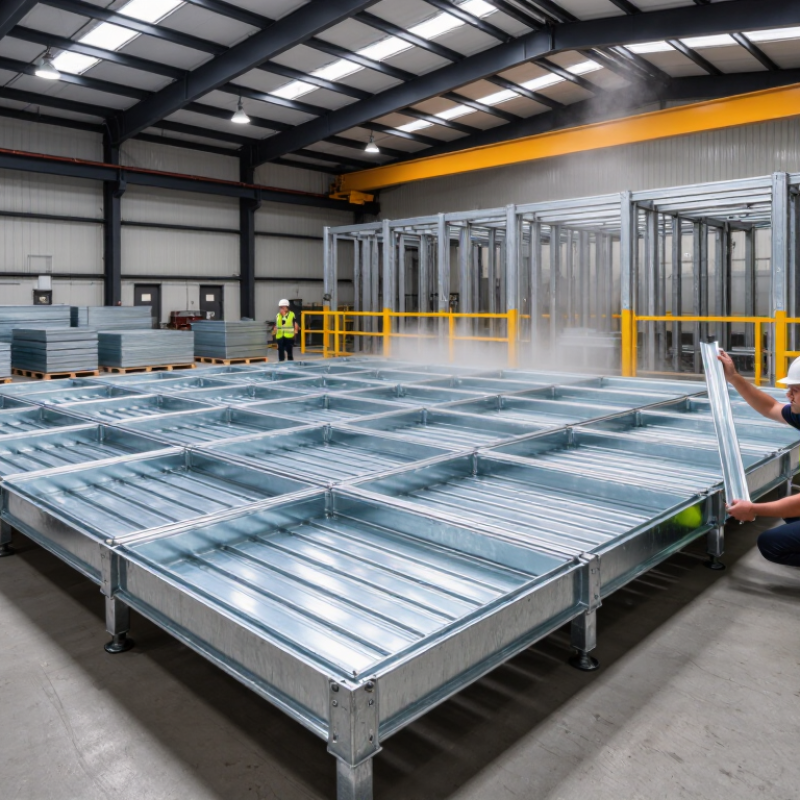
Galvanized grating combines an open steel grid with a zinc coating that helps protect the metal from corrosion. Hot-dip galvanizing is commonly used, leaving a visible finish that may vary slightly across bars and edges. That matters. The open spaces allow water, light, and debris to pass through, while the steel bars provide a firm walking or working surface. The coating is protective, not indestructible; scratches and cut edges deserve attention.
Common applications include industrial walkways, service platforms, stair treads, drainage channels, and trench covers. At a processing site, grating can let rainwater drain instead of pooling on a platform. In a warehouse, it can provide access above equipment without blocking airflow. It also helps workers see obstructions below their feet. Not every open grid suits every task: small tools or narrow heels may pass through wider openings.
For a suitable selection, buyers should compare load requirements, panel span, bearing-bar direction, and surface style. Wet or oily areas may call for serrated bars, but no surface removes every slip risk. Check how panels will be supported and fastened, and consider the local exposure to moisture or chemicals. I have seen specifications focus heavily on coating thickness while overlooking the actual support layout. That is easy to miss. A qualified supplier or engineer can help verify the design details before installation.
Choosing galvanized grating starts with how it will be used.
Bar grating suits many platforms, while close-mesh or plank grating can better address small-wheel traffic or dropped-object concerns. Match the bearing-bar direction to the actual support span, not just the walkway length.
Check the span. NAAMM’s Metal Bar Grating Manual provides load tables based on bar size, spacing, and span; compare the listed deflection and load values with your project conditions. A catalog size alone does not confirm capacity.
Specify the steel grade, zinc coating, and finished dimensions together.
ASTM A123/A123M-23 sets coating requirements for structural steel products; for steel sections at least 6.4 mm thick, its table gives an 85 μm average coating minimum and a 70 μm local minimum. Confirm that the selected grating construction is covered by the specified coating standard.
Measure panel length, width, bearing-bar depth, and crossbar spacing on the drawing, then allow for support seats, cut-outs, and installation clearance.
Small details matter. I still find drawings that omit the support width; it seems minor, but it can change the usable span.
Ask the supplier to confirm panel orientation, tolerances, and coating treatment for cut edges before production.
Load capacity starts with the real support span, not the panel’s overall dimensions. Ask suppliers for rated loads at the specified span, along with deflection limits and test or calculation details. Include concentrated loads from wheel traffic, equipment feet, and stored materials; a uniformly distributed load alone may not represent site conditions. Check whether loads are static or moving. That distinction matters.
A common buying mistake is comparing load figures without confirming how the grating will be supported. Confirm bearing-bar direction, seat depth, panel fixing method, and the condition of the supporting steel. For safety, review opening size and pedestrian use, especially where narrow heels, tools, or debris could pass through. Wet or oily areas may need a serrated surface, but serrations can complicate cleaning and handling. There is a trade-off.
Surface requirements deserve equal attention. Specify the expected exposure, such as coastal salt spray, wash-down chemicals, or occasional standing water, then confirm the galvanized coating requirements and repair approach for cut edges. A bright finish alone does not prove suitable protection. Request coating and dimensional records, and inspect sample panels for burrs, warped edges, and inconsistent spacing. Requirements can be overlooked. Recheck them against the installation drawings before ordering; even a small mismatch in bearing-bar direction can delay fitting or reduce the intended support.
When comparing galvanized grating suppliers, look beyond the quoted price. Ask for panel drawings, load tables, steel grade details, and documented dimensional tolerances. A clear load table should state span, bearing-bar direction, and the loading basis. Check that the supplier can explain how these details match your support spacing. Small gaps matter.
Quality documents should identify the applicable coating standard, such as ISO 1461 or ASTM A123 where relevant. Confirm the standard’s scope with the supplier; requirements can differ by product and market. Request coating-thickness records and inspection criteria, not just a general claim of compliance. For a sample panel, inspect cut edges, welds, and corners, where thin or uneven coating may be easier to spot.
Ask when galvanizing occurs in the production sequence. Hot-dip galvanizing after fabrication can coat many exposed surfaces, but venting, drainage, and panel design affect the result. Look for blocked openings, zinc runs, or rough deposits that could complicate installation. I have seen buyers focus on a bright finish and miss fit-up details. Appearance helps, but it is not a measurement. Compare sample records with the actual order, and clarify how damaged areas or rejected panels are handled. Supplier answers should be specific, written, and consistent.
| # | Buying Tip | What to Compare or Confirm | Useful Specification or Evidence | Warning Sign |
|---|---|---|---|---|
| 1 | Define the application and load case | Compare proposals using the same clear span, support conditions, load type, and required deflection limit. State whether loads are uniform, concentrated, or moving. | Project drawings and a written load schedule; request load tables or calculations for the specified bar size, spacing, and span. | A load rating quoted without span, support conditions, or load assumptions. |
| 2 | Specify the grating construction | Compare bearing-bar depth and thickness, bearing-bar spacing, cross-bar spacing, panel dimensions, and whether the grating is welded, pressure-locked, or another specified construction. | Dimensioned drawings and a bill of materials; identify the applicable grating design and fabrication reference, such as the relevant project-adopted edition of NAAMM MBG 531. | Offers that use different bar sizes or spacing while presenting them as equivalent. |
| 3 | Choose the right surface and opening pattern | Assess plain or serrated bearing bars, opening size, drainage, ventilation, footwear, and the risk of small objects passing through. Check applicable accessibility and safety requirements for the site. | Project-specific opening limits and surface requirements; sample or drawing showing bar orientation and serration details. | A generic “anti-slip” claim without a defined surface profile or project-specific evaluation. |
| 4 | Match the coating standard to the product | Confirm the specified standard, its edition, and that it applies to the product and coating route. Common references include ISO 1461 for hot-dip galvanized coatings on fabricated iron and steel articles and ASTM A123/A123M for zinc coatings on iron and steel products. | Purchase specification identifying the governing standard and acceptance requirements. Confirm any exclusions or product-specific requirements with the project engineer. | A supplier cites a standard without naming its edition or confirming its scope for the supplied grating. |
| 5 | Clarify the galvanizing process | For fabricated grating, ask whether the complete assembly will be hot-dip galvanized after fabrication or whether components are galvanized before assembly. These routes can differ in coating continuity at welds, cut edges, and connections. | Written process description, process sequence, and confirmation of how cut edges, welds, and any specified repairs are handled. | The process is described only as “galvanized,” with no detail on whether coating occurs before or after fabrication. |
| 6 | Set coating acceptance requirements correctly | Use the governing standard’s applicable requirements rather than assuming one universal coating-thickness value. Requirements can depend on the standard, material category, and steel thickness. | Request inspection records showing the specified coating checks and acceptance criteria. Agree on inspection locations, sampling, and handling of nonconformities before production. | A single thickness figure is promised without identifying the standard, material category, or measurement method. |
| 7 | Check steel grade and traceability | Compare the specified base-metal grade, material certificates, heat or batch identification, and traceability through fabrication and galvanizing. | Mill test certificates or equivalent material documentation, linked to the purchase order and supplied panels where required by the project. | Material grade is omitted or certificates cannot be linked to the delivered product. |
| 8 | Review fabrication quality and fit-up | Check panel dimensions, squareness, bearing-bar alignment, weld or lock integrity, banding, cut-outs, and compatibility with supporting steelwork. | Approved shop drawings, stated dimensional tolerances, inspection records, and a defined method for checking panel fit and attachment details. | Dimensions or tolerances are left open until after manufacture, or attachment details are not coordinated with the structure. |
| 9 | Compare repair and inspection procedures | Ask how coating damage or uncoated areas are assessed and repaired, and confirm that any repair method meets the governing project requirements. ASTM A780/A780M is a commonly referenced practice for repairing damaged hot-dip galvanized coatings. | Documented inspection and repair procedure, repair records when applicable, and agreement on what requires rejection, repair, or reinspection. | Unapproved touch-up is offered as a substitute for meeting the specified coating acceptance requirements. |
| 10 | Evaluate delivery, packing, and total cost | Compare lead time, packaging, corrosion-protection measures during transport, lifting and unloading requirements, shipping terms, duties, and replacement arrangements for damaged or nonconforming goods. | A complete quotation with panel weights and quantities, packing details, delivery terms, schedule, documentation, and clearly stated exclusions. | The lowest unit price excludes freight, packing, inspection, required accessories, or responsibility for transit damage. |
Note: Confirm the governing standards, editions, design assumptions, and acceptance criteria in the project specification before placing an order.
Compare galvanized grating prices only after matching the specification. A low quote may cover lighter bearing bars, wider spacing, or fewer panels. Ask suppliers to state bar dimensions, mesh spacing, panel sizes, steel grade, and galvanizing requirements. Check whether cutting, edge banding, and fasteners are included. Details matter. Request a dated quotation with currency, validity period, payment schedule, and any tooling or packing charges. If two offers differ sharply, ask for the difference in writing; price alone rarely explains it.
Documentation should identify the product and its inspection basis. Request drawings, a material certificate, coating records, and a packing list that match the order. Confirm how dimensions and coating thickness are measured, and agree on acceptable tolerances before production. It is easy to overlook this until a shipment arrives. For packaging, specify bundle size, lifting points, steel banding, and protection for sharp edges. Ask for labels showing panel marks and quantities. Agree on the named delivery place, shipping method, estimated lead time, unloading responsibility, and who handles export and import paperwork. Build in time for inspection and port delays. Delivery estimates are not guarantees, so keep some schedule allowance.
Checklist coverage across pricing, specifications, documentation, packaging, and delivery.
The bars show how the ten checklist tips are distributed by topic; they are not market statistics or supplier ratings. Compare like-for-like quote bases, verify technical requirements and export documents, agree on protective packaging, and confirm delivery terms and lead times in writing.
It is an open steel grid with a zinc coating that helps resist corrosion. Water and light can pass through.
It is used on walkways, service platforms, stair treads, drainage channels, and trench covers. A rain-wet platform can drain through its openings.
Match the grid to its use. Close-mesh or plank styles may help with small wheels or dropped objects, but openings still need checking.
Confirm the support span, bearing-bar direction, panel dimensions, and installation clearance. Check the span. A drawing can miss the support width.
Review load information for the bar size, spacing, span, and loading conditions. A catalog size alone does not confirm capacity.
No. Serrated bars may improve traction in wet or oily areas, but they cannot remove every slip risk.
Look closely at cut edges, welds, corners, and openings. Uneven coating or rough deposits may affect fit and installation.
Ask for drawings, load details, steel grade, coating records, and dimensional tolerances. Get answers in writing; appearance alone is not a measurement.
No. It helps protect the steel, but scratches and cut edges need attention. I would not assume every exposed area is equally protected.
This guide helps global buyers make informed decisions when sourcing Galvanized Grating for industrial, commercial, and infrastructure projects. It explains how to match grating types, materials, panel dimensions, and finishes to the intended application, while considering environmental conditions and installation needs. Buyers will also learn to assess load capacity, walking safety, and surface requirements so the selected product performs reliably under expected use.
The article also outlines practical ways to compare suppliers, review quality standards, and understand differences in galvanizing processes. Before placing an order, buyers should confirm pricing details, product documentation, packaging methods, and delivery terms. By evaluating these factors together, purchasers can reduce uncertainty, communicate specifications clearly, and select grating that meets project requirements for performance, durability, and logistics.

Jiulong